Michigan Law Firm Challenges State’s Requirement of Outdated Technicalities to Block Justice
For Immediate Release | August 17, 2025
https://olcplc.com/public/media?1755458365
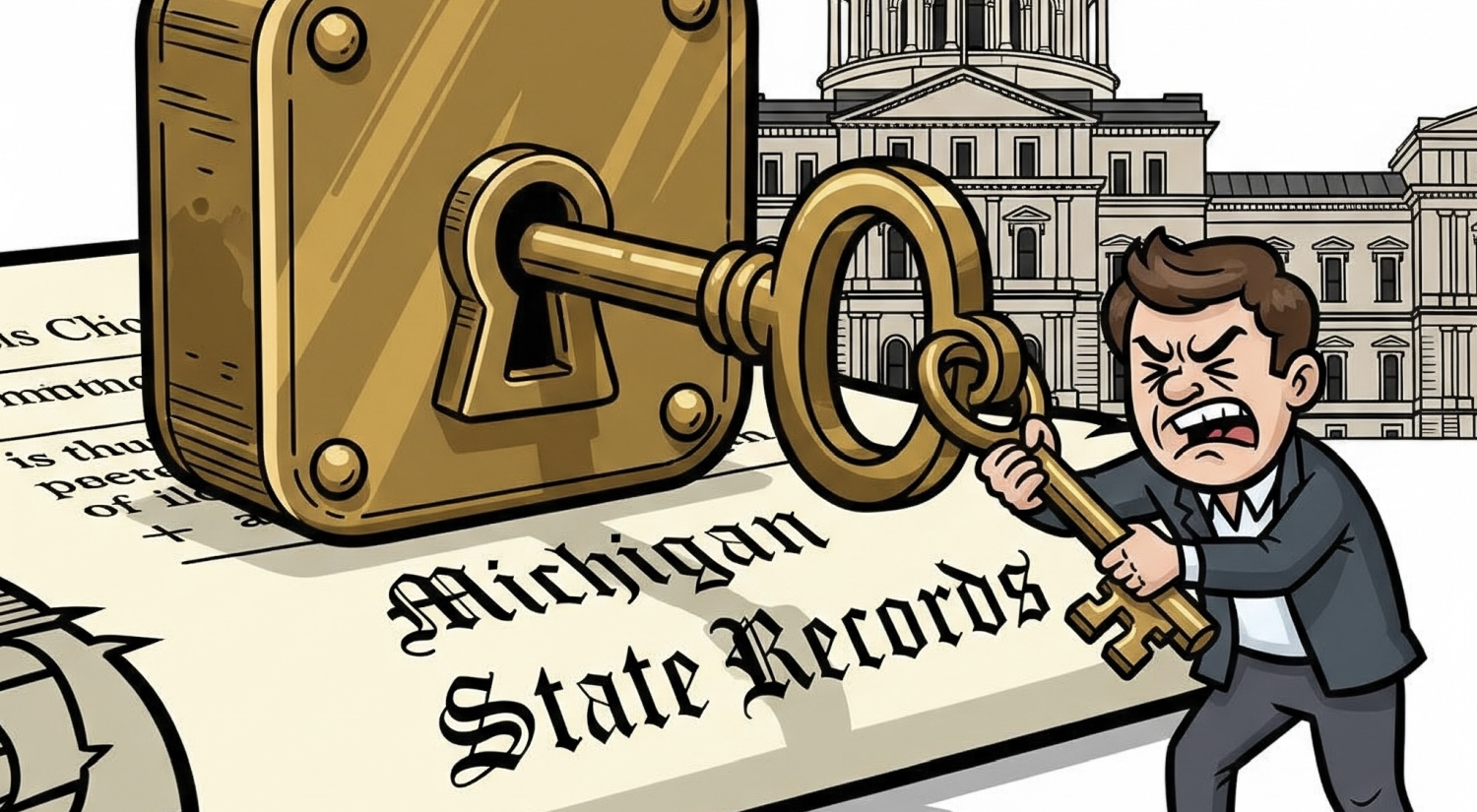 LANSING, MI – Outside Legal Counsel PLC has filed an appeal to the Michigan Supreme Courtafter state officials successfully used an archaic notarization rule to shut down a Freedom of Information Act (FOIA) enforcement lawsuit. The firm argues that the state is hiding behind meaningless paperwork hurdles rather than addressing violations of the public’s right to know.
At the heart of the case is whether Michigan can continue to enforce a 20th-century “wet ink before a notary” requirement that directly conflicts with federal law. Under 28 U.S.C. § 1746, Congress expressly allows litigants to verify documents under penalty of perjury—without needing to hunt down a notary. Yet, in this case, the Court of Claims and Court of Appeals dismissed a FOIA enforcement action solely because the complaint was verified using Congress’s modern standard instead of Michigan’s outdated ceremony.
“This is bureaucracy at its worst,” said attorney Philip L. Ellison of Outside Legal Counsel. “The State of Michigan is using ceremonial technicalities—like insisting on finding a notary—as a trapdoor to dismiss otherwise valid lawsuits. Citizens are being denied their day in court not because of the merits, but because of pointless red tape.”
The case has broad implications for all Michiganders. If allowed to stand, the ruling means that rural residents, small law firms, solo practitioners, and ordinary citizens could lose their rights in court simply because they used a declaration under penalty of perjury rather than driving across town to find a notary. In FOIA cases—where the law requires disputes to be “expedited in every way”—these extra steps only delay access to truth and transparency.
“The courts should be deciding whether the Department of Treasury broke the law, not whether a litigant stood in front of a notary,” Ellison added. “Michigan’s insistence on outdated barriers as a prerequisite to access a court, when Congress decreed otherwise, puts silly form over substance and shields government agencies from accountability.”
Outside Legal Counsel’s filing urges the Michigan Supreme Court to align state practice with federal law, eliminate obsolete notarization barriers, and restore meaningful access to the courts.
###

